The short answer
A junk removal load is split up after pickup. Usable furniture can be donated, metal and appliances go to recyclers that remove refrigerant first, mattresses go to Bye Bye Mattress sites, e-waste to e-waste recyclers, green waste to composting, and clean concrete and dirt to recycling yards. What is left goes through a transfer station to the landfill.
Sorting starts in the driveway
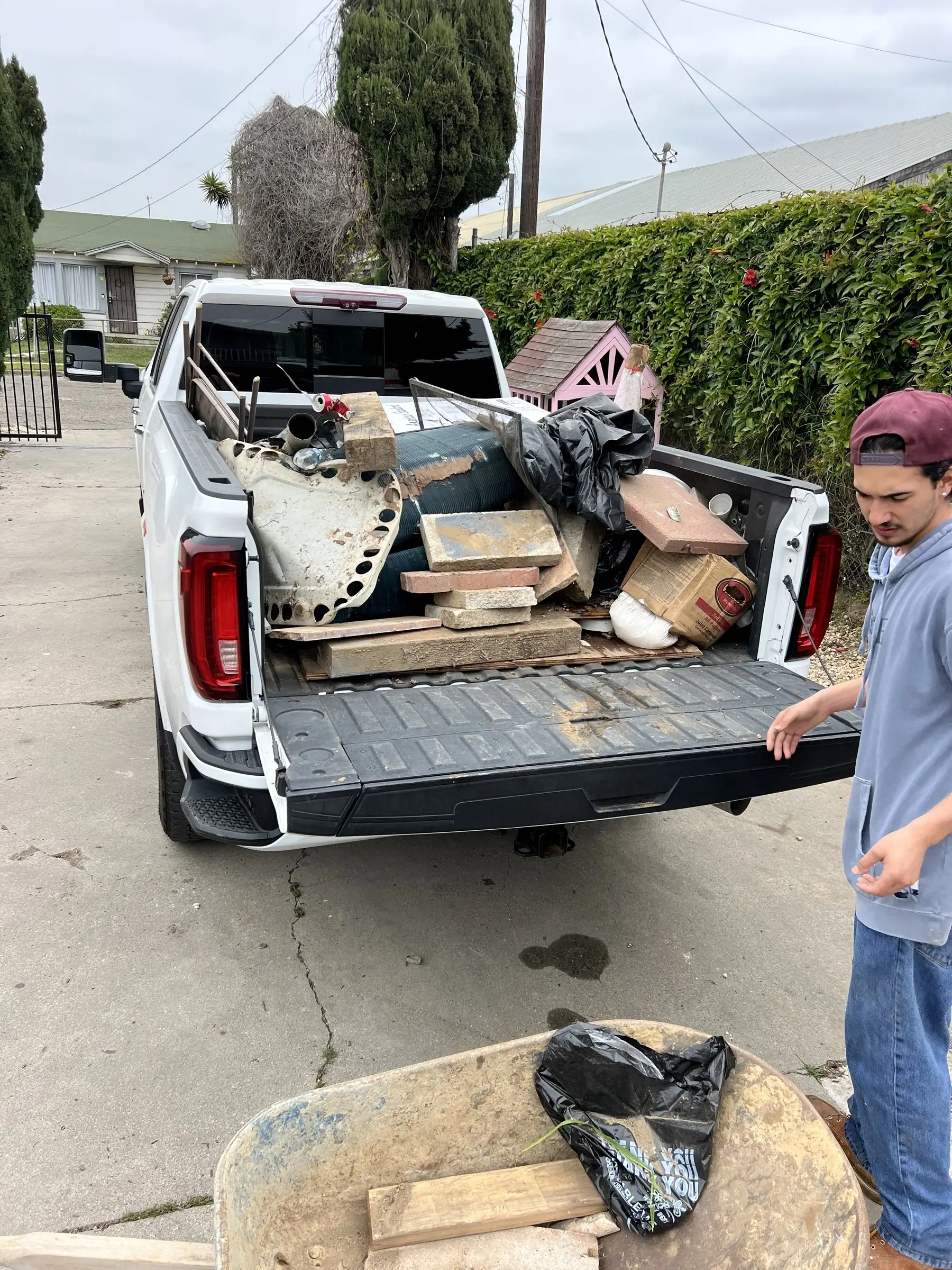
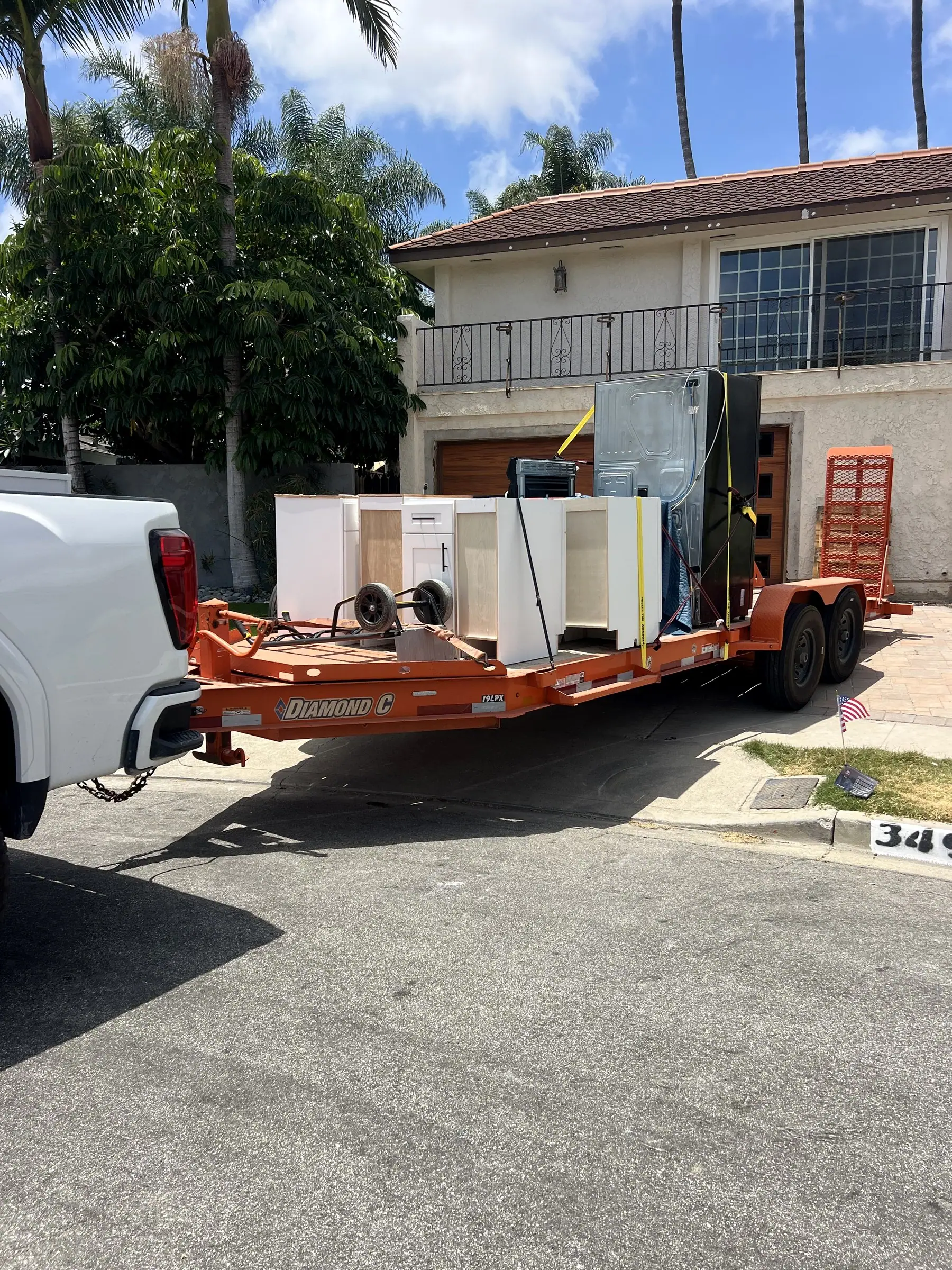
The easiest time to sort a load is while it is being loaded. A refrigerator, a mattress, a pile of green waste and a TV each go somewhere different, so they are kept apart on the trailer instead of buried under boxes.
It is also when you decide what stays and what can be donated. Furniture and household goods in good shape have a second life; broken particleboard, stained mattresses and moldy boxes don’t.
Some things never go on the truck at all. Paint, pool chemicals, pesticides, motor oil and batteries are household hazardous waste and go to county and city collection programs, not to a hauler. Material that might contain asbestos needs a licensed abatement company first.
After that, the load is a series of stops. The rest of this post follows each kind of item to where it goes in Ventura County.
Donation: furniture and household goods
Usable furniture, working appliances, clothes, kitchenware and tools can go to secondhand stores and charities. The City of Ventura suggests donating gently used furniture and appliances to local secondhand stores before throwing them out (City of Ventura), and Goodwill Industries of Ventura and Santa Barbara Counties also takes e-waste for free at several stores, by the county’s list (Ventura County e-waste).
Donation has limits. Stores turn down upholstered furniture with stains or tears, mattresses, cribs and car seats for safety reasons, and anything broken. Large pieces may need a store with room for them.
If donating matters to you, say so when you book. Separating donations and dropping them off takes longer than a single trip to the transfer station, so it can change the time on the job. Set aside what you want donated and mark it, and ask for a donation receipt from the store if you plan to claim it on your taxes.
The landfill is the last stop, not the first. Most of a typical cleanout has somewhere better to go.
Appliances and scrap metal
Refrigerators, freezers, air conditioners, washers, dryers, stoves and water heaters are mostly steel, and they are recycled as scrap metal. Before that, California requires certain parts to come out. The state’s Department of Toxic Substances Control says materials that require special handling, like refrigerant, used oil and mercury in switches and temperature controls, must be removed from major appliances before they are crushed, baled or shredded, and can’t be disposed of at a solid waste facility (California DTSC appliance fact sheet).
That is why appliances go to certified appliance recyclers or scrap yards that handle the removal, and why they often cost more to dispose of than furniture of the same size. Removing refrigerant also requires an EPA certified technician.
On the Santa Barbara County side, the county’s recycling site lists options for large appliances (LessIsMore.org large appliances).
Other metal, like bed frames, exercise machines, shelving, bikes and old tools, goes to scrap recyclers as well.
Scrap metal is one of the few parts of a junk load that has value at the other end, which is why scrap yards take it by weight. Sorting it out of the mixed load is what keeps it out of the landfill.
Mattresses and box springs
Mattresses take up a lot of landfill space and are hard to compact, so California runs a statewide recycling program for them. Bye Bye Mattress, run by the Mattress Recycling Council, takes used mattresses and box springs free at participating collection sites and events, paid for by a recycling fee charged on every new mattress sold in the state (Bye Bye Mattress).
Ventura County Public Works has pointed residents to free drop-off at local sites through the program (Ventura County Public Works), and the City of Ventura says Gold Coast Recycling and Transfer Station recycles one mattress set per year free for city residents (City of Ventura).
At a recycler, mattresses are taken apart. The steel springs go to scrap metal, the foam and fiber can be reused in carpet padding and other products, and wood frames from box springs are chipped. Sites can limit how many units they take, and mattresses that are wet or badly soiled may be refused.
E-waste
TVs, computer monitors, laptops, printers, game consoles, phones, stereos and programmable small appliances are e-waste. Ventura County explains why: a programmable appliance likely has a circuit board, and the solder in circuit boards often contains lead or mercury (Ventura County e-waste). A microwave is the county’s example.
E-waste goes to e-waste recyclers, which pull out metals and handle the hazardous parts. In Ventura County, the drop-off depends on your city: Gold Coast takes it for Ventura, Camarillo and Ojai residents, Del Norte for Oxnard and Port Hueneme, and the county runs collection events for Fillmore, Santa Paula, Ojai and the unincorporated areas.
Small appliances that aren’t programmable, like a toaster, blender or coffee maker, aren’t e-waste. The county says they can go in curbside recycling.
Phones, tablets and laptops hold personal data. Before they go anywhere, sign out of accounts, remove SIM and memory cards, and erase the device. For a phone, the county also lists programs that take donated phones for reuse, such as turning them into 911-only emergency phones for people in need.
Green waste, dirt and concrete
Branches, brush, palm fronds, grass and garden waste go to composting and mulch. Under California’s SB 1383, yard waste and food waste are organics that belong in the green cart or at a green waste facility, not the trash, and Ventura County runs its organics program to match (Ventura County organics recycling). In parts of the county, the finished compost comes back free to residents.
Clean concrete and asphalt are crushed and reused as base under roads and slabs, and clean dirt is reused as fill. Both are usually cheaper to drop off clean than mixed with trash, which is why hauling loads are kept separate.
Construction debris from permitted projects in unincorporated Ventura County has to go to a sorting facility, an authorized hauler or be reused, under county Ordinance 4590, and CALGreen requires 65 percent of it to be kept out of landfills (Ventura County C&D program).
How to keep more of your load out of the landfill
Most of what is in a garage or a cleanout can go somewhere other than the landfill, and a little planning before pickup day makes it more likely:
- Pull out donations early. Furniture and household goods in good shape are easiest to donate before the rest of the pile is loaded around them.
- Keep e-waste together. TVs, monitors, computers and microwaves in one place go straight to an e-waste recycler.
- Take paint back. Unused paint goes free to PaintCare drop-off sites at participating stores, by the county’s hazardous waste page (Ventura County hazardous waste).
- Use the green cart. Small amounts of yard waste belong in your organics cart under SB 1383; save the hauler for the big piles.
- Keep dirt and concrete clean. A clean pile of dirt or concrete is recycled; the same pile mixed with trash isn’t.
- Say what matters to you. If recycling or donation is important, tell the hauler when you book.
None of this has to be perfect. Even a rough sort, with the metal, the electronics and the donations set aside, changes where much of a load ends up.
What ends up in the landfill
After the donations, metal, appliances, mattresses, e-waste, green waste and clean debris are pulled out, what is left is the mixed trash: broken particleboard furniture, worn upholstery, plastic, old carpet and the odds and ends of a cleanout.
That goes to a transfer station like Gold Coast in Ventura or Del Norte in Oxnard, where loads are sorted again for anything recyclable before the rest is trucked to a landfill, or straight to the Simi Valley Landfill and Recycling Center. Our guide to the dumps in Ventura County covers each one.
If you want to know where your load goes, ask. With junk removal from Nico’s Hauling ASAP, the estimate is free and you can tell us what you would like donated or recycled before we load. Call or text photos to (805) 794-2842.
Questions people ask
Do junk removal companies have to recycle?
Some items, yes. California law requires refrigerant and other special materials to be removed from appliances, and e-waste and hazardous waste can’t go in the trash.
Can I get a receipt showing my junk was recycled?
For construction projects, sorting facilities give recycling receipts. Ask for one if your permit needs it.
What happens to a couch after junk removal?
If it is in good shape it can be donated. Otherwise the frame and any metal are recycled where possible and the rest goes through a transfer station to the landfill.